
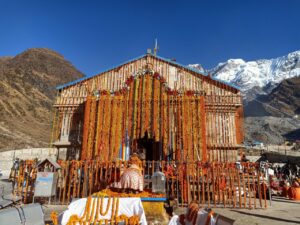
🔱 Kedarnath – A Journey to the Heart of Lord Shiva’s Abode
🕉️ Where Faith Rises Higher Than the Mountains
Hidden deep in the Garhwal Himalayas at an altitude of 3,583 meters, Kedarnath is more than just a temple — it’s a powerful experience. It is a place where devotion conquers fatigue, where the icy air humbles your soul, and where every step toward the sacred shrine feels like a step inward.
For many, Kedarnath is the most difficult — and the most rewarding — of all the Chardham destinations. The journey to the temple is not just about reaching a location; it is about surrender, belief, and being one with the divine. With the mighty Kedarnath Peak towering behind, the temple stands as a timeless witness to the resilience of faith and the strength of nature.
🛕 Kedarnath Temple – A Shrine of Legends and Miracles
Dedicated to Lord Shiva, Kedarnath is one of the 12 Jyotirlingas and a key part of both the Char Dham and Panch Kedar pilgrimages. According to legend, after the Mahabharata war, the Pandavas sought Shiva to forgive them for their sins. Lord Shiva, avoiding them, took the form of a bull and vanished into the ground at Kedarnath, leaving behind his hump — which is now worshipped as the main idol in the temple.
The stone temple, believed to be over 1,000 years old, was revived by Adi Shankaracharya in the 8th century. Amazingly, during the devastating floods of 2013, the temple withstood the disaster while everything around it was washed away — a miracle that only deepened its spiritual significance.
🏔️ Reaching Kedarnath – The Road to Reverence
Getting to Kedarnath is not easy — and that’s part of what makes it so special.
📍 Base Location: Gaurikund
This is where the motorable road ends. From Gaurikund, pilgrims must trek 21 km uphill to reach Kedarnath. The route is steep and can be physically demanding but offers incredible mountain views, roaring rivers, and a deep spiritual atmosphere.
🛤️ Modes of Travel:
-
Trekking (16 km from Gaurikund)
-
Pony/Mule Services
-
Palanquins (Palki) for elderly or unfit travelers
-
Helicopter Services (from Phata, Guptkashi, Sirsi)
The trek passes through Jungle Chatti, Bheembali, Linchauli, and finally Kedarnath Base Camp. The sound of chants, the silence of the mountains, and the sheer willpower of fellow pilgrims make the journey unforgettable.
📿 Spiritual Experience at Kedarnath
Upon reaching, pilgrims are greeted by the majestic stone temple, set against the raw, dramatic beauty of the Himalayas. The inner sanctum houses a naturally formed Shiva lingam, shaped like a bull’s hump. Devotees believe that praying here cleanses lifetimes of karma.
Rituals at the temple include:
-
Rudrabhishek
-
Aarti (Morning and Evening)
-
Darshan of the Jyotirlinga
-
Offering of bilva leaves, ghee, and water
The spiritual energy at Kedarnath is unlike anywhere else. Most visitors describe it as overwhelming — the kind of experience that stays with you long after you’ve returned to your everyday life.
🏞️ What to See Around Kedarnath
Beyond the main temple, there are several spiritual and scenic spots to explore:
📍 Adi Shankaracharya Samadhi
Right behind the temple lies the samadhi (final resting place) of Adi Shankaracharya, who helped revive Sanatan Dharma in the Himalayas.
📍 Bhairavnath Temple
About 1 km uphill from Kedarnath, this temple is dedicated to Bhairav Baba, the fierce guardian deity of Kedarnath. It also offers stunning views of the valley below.
📍 Chorabari Tal (Gandhi Sarovar)
A 3–4 km trek from Kedarnath, this small glacial lake is believed to be the spot where ashes of Mahatma Gandhi were immersed.
📅 Best Time to Visit Kedarnath
The temple is open for only 6 months (May to October) each year due to extreme weather conditions.
🌤️ Ideal Time:
-
May to mid-June: Pleasant and vibrant.
-
September to mid-October: Post-monsoon freshness and fewer crowds.
⚠️ Avoid:
-
July and August: Heavy monsoons and landslide risks.
-
Winter (Nov–April): Temple is closed and idol is moved to Ukhimath for winter worship.
🏨 Accommodation and Facilities
Kedarnath now has improved infrastructure, especially after the 2013 floods. Facilities include:
-
GMVN Guest Houses and Tents
-
Budget Lodges near the temple
-
Food stalls offering hot vegetarian meals
-
Medical camps and resting points en route
Despite high altitude and cold temperatures, the hospitality and arrangements by local and state authorities are commendable.
🙏 Why Kedarnath is More Than a Destination
Visiting Kedarnath is not just a physical journey — it’s an emotional and spiritual transformation. The silence of the mountains, the strength of the pilgrims, the ancient energy of the temple, and the force of Lord Shiva’s presence create a feeling of both awe and surrender.
People often come back stronger — in body, spirit, and belief.
Kedarnath: A Sacred Journey to Lord Shiva’s
Nestled in the majestic Himalayas, at an altitude of 3,583 meters, Kedarnath Dham is one of the holiest and most revered pilgrimage destinations in India. Situated in the Rudraprayag district of Uttarakhand, Kedarnath is part of the sacred Char Dham Yatra, and is dedicated to Lord Shiva, one of the principal deities in Hinduism. Baba Kedarnath attracts millions of devotees every year who come to seek the divine blessings of Lord Shiva.
Baba Kedarnath Temple:
The heart of Kedarnath is the ancient Baba Kedarnath Temple, built by the Pandavas of the Mahabharata era. The temple is a beautiful example of precious stone Design and has withstood the test of time, enduring harsh weather and natural calamities for centuries. The temple is a beautiful example of Kedarnath’s mystical and divine aura, offering a sense of tranquility and connection with the divine.
It is believed that Lord Shiva, in the form of a Jyotirlinga, resides here. Pilgrims believe that praying at this temple cleanses their sins and helps them attain moksha (liberation from the cycle of life and death). The Kedarnath Temple is part of the Chota Char Dham Yatra and is one of the 12 sacred Jyotirlingas of Lord Shiva scattered across India.
Mythological Significance:
According to Hindu mythology, the Pandavas, after the great Kurukshetra war, sought Lord Shiva’s blessings to atone for the sins committed during the war. However, Lord Shiva, in his furious form, avoided meeting them. The Pandavas, desperate to seek forgiveness, finally found Lord Shiva in the form of a bull at Kedarnath, where the divine presence remains embedded in the Jyotirlinga worshipped inside the temple.
Accessibility and Trekking:
Reaching Kedarnath is an adventure in itself. The journey is a mix of spiritual dedication and physical challenge, making the pilgrimage even more rewarding. From Gaurikund, located about 22 kilometers away, devotees must undertake a trek to reach the temple. The trek can be challenging, with steep and narrow paths, but the views of snow-capped mountains and beautiful landscapes make the journey unforgettable.
For those who are unable to trek, ponies, palkis, and helicopter services are available, ensuring that more pilgrims can visit the temple despite the tough terrain. The helicopter service is particularly popular as it allows devotees to reach the temple with minimal physical effort, although trekking is still the most favored way of reaching Kedarnath for many pilgrims.
Spiritual Experience:
The Kedarnath Dham is more than just a pilgrimage; it is an immersive spiritual experience. The chants of “Om Namah Shivaya” and the constant devotion of pilgrims enhance the spiritual ambiance. The beautiful atmosphere, coupled with the beauty of the all over mountains, valleys and river, helps create peace and serenity. Making it a place of inner peace and contemplation.
In addition to the main temple, there are several smaller shrines and sacred sites near the temple, such as Bhairon Temple, Chorabari Lake (also known as Gandhi Sarovar), and the Gauri Kund hot spring, where pilgrims take a holy dip before ascending the temple.
Kedarnath After the 2013 Disaster:
Kedarnath faced a major disaster in June 2013 when devastating floods and landslides caused widespread destruction. Despite the natural calamity, Kedarnath and the temple survived the disaster, though the surrounding areas were heavily impacted. Since 2013, efforts have been made to restructure and restore the region’s all ovier infrastructure, making it more safe for pilgrims.
Conclusion:
Visiting Kedarnath Dham is a deeply holy journey that combination of adventure, devotion, and natural beauty. A visit to this holy land of Lord Shiva is a chance to connect with spirituality and experience the grandeur of the Himalayas. The Kedarnath temple offers an opportunity to seek blessings from one of the most powerful deities of Hinduism. The temple stands as a symbol of divine grace, welcoming pilgrims from all over the world.
Kedarnath Dham is a must-visit place for all those who desire a life-changing experience, whether you are a devotee on a spiritual quest or a nature lover seeking solace in the lap of the mountains.
More Information:https://chardhamyatrataxi.com/contact-us/
Book Package Contact and Visit: http://www.charbhujatravels.in