
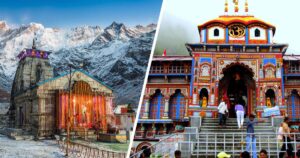
🕉️ Kedarnath and Badrinath – A Sacred Himalayan Sojourn Through Time, Devotion, and Mountains
🏔️ Where Earth Meets Heaven, and Faith Walks with You
The twin shrines of Kedarnath and Badrinath aren’t just temples — they are life-changing journeys into the soul of India’s spiritual and natural heritage. Nestled high in the Garhwal Himalayas of Uttarakhand, these two divine abodes are part of the sacred Char Dham Yatra, attracting millions of pilgrims and travelers every year.
Whether you seek divine connection, inner peace, or simply the raw beauty of the mountains — Kedarnath and Badrinath welcome you with open arms and deep silence.
🔱 Kedarnath – The Temple That Withstood Time and Tragedy
📍 Altitude: 3,583 meters
🕉️ Deity: Lord Shiva (Jyotirlinga)
🔥 Essence: Devotion, endurance, and transformation
Kedarnath is one of the most revered shrines dedicated to Lord Shiva, believed to be more than 1,000 years old. Built from massive grey stone slabs without mortar, this ancient temple stands against the mighty Kedarnath Peak and seems to guard the entire valley.
🌄 The Journey to Kedarnath
The trek to Kedarnath begins from Gaurikund, a small town 16 km below the shrine. The trail winds through rugged terrains, icy rivers, and towering cliffs — testing not just the body, but the spirit.
-
Trek Distance: 21 km (One way)
-
Alternate travel: Mule, palanquin, or helicopter services from Phata/Guptkashi/Sersi
-
En route spots: Jungle Chatti, Bheembali, Linchauli, Kedarnath Base Camp
🙏 Spiritual Highlights
-
Kedarnath Temple: Home to a naturally formed Shiva Lingam (bull’s hump form)
-
Adi Shankaracharya Samadhi: A spiritual icon’s final resting place
-
Bhairavnath Temple: Protector of Kedarnath, located on a nearby hilltop
-
Gandhi Sarovar: A peaceful lake nearby, perfect for reflection
The temple’s survival during the 2013 flash floods, while everything around was destroyed, has only deepened its mystical and divine aura.
🛕 Badrinath – The Celestial Abode of Lord Vishnu
📍 Altitude: 3,133 meters
🌊 Deity: Lord Vishnu (Badri Narayan)
💨 Essence: Purity, grace, and salvation
Located about 230 km from Kedarnath, Badrinath is part of both the Char Dham and Chota Char Dham. The temple, painted in vibrant colors, stands on the banks of the Alaknanda River, flanked by the towering Neelkanth Peak. The air is crisp, the chants are soothing, and the spiritual energy is palpable.
🛤️ Reaching Badrinath
-
Nearest town: Joshimath
-
Accessible by road from Rishikesh, Rudraprayag, and Kedarnath (via Guptkashi or Ukhimath)
-
Road journey offers mesmerizing river views, forests, and Himalayan vistas
🌸 Spiritual & Scenic Attractions
-
Badrinath Temple: Houses a black stone idol of Lord Vishnu in meditation
-
Tapt Kund: Natural hot springs where pilgrims bathe before darshan
-
Mana Village: India’s last village before the Tibet border
-
Vyas & Ganesh Gufa: Caves believed to be where Mahabharata was written
-
Charan Paduka: Rock bearing Lord Vishnu’s footprints
-
Neelkanth Peak: A golden spectacle during sunrise
Badrinath isn’t just a temple visit — it’s a walk through legends, a brush with the divine, and a celebration of Himalayan culture.
✨ Why Visit Both Kedarnath and Badrinath?
Though they lie miles apart, Kedarnath and Badrinath complement each other spiritually and symbolically. Kedarnath represents detachment, transformation, and inner strength, while Badrinath embodies grace, compassion, and wisdom.
Visiting both temples in a single journey is not just about checking off pilgrimage spots — it’s about balancing energies, experiencing two facets of divinity, and reconnecting with yourself in the lap of nature.
📅 Best Time to Visit
-
Season: May to mid-June and September to early November
-
Monsoons (July–August): Risk of landslides and travel disruption
-
Winters (Nov–April): Both temples are closed due to heavy snowfall
🏨 Stay Options
Both destinations offer a range of accommodations:
-
GMVN Guesthouses (government-run)
-
Budget hotels, lodges, and ashrams
-
Private camps and luxury stays (limited)
Local food is vegetarian, sattvic, and simple — hot meals, tea, and snacks are readily available.
🚗 How to Plan Your Kedarnath–Badrinath Yatra
Suggested Itinerary (7 Days)
Day 1: Arrive at Rishikesh/Haridwar
Day 2: Drive to Guptkashi / Sonprayag
Day 3: Trek or fly to Kedarnath → Overnight stay
Day 4: Return from Kedarnath → Stay at Guptkashi
Day 5: Drive to Badrinath via Joshimath
Day 6: Explore Badrinath, Mana Village → Return to Rudraprayag
Day 7: Return to Haridwar / Rishikesh
🙏 Final Reflections – More Than a Pilgrimage
A journey to Kedarnath and Badrinath is not about reaching a temple — it’s about walking through centuries of devotion, letting go of ego, and allowing nature and divinity to transform you. From the roaring rivers of Alaknanda to the silent peaks of Kedarnath, every moment feels sacred.
You may return with tired feet, but you’ll also return with a full heart and a peaceful mind.
Kedarnath and Badrinath Dham Yatra
Both Kedarnath – Badrinath Dham are considered to be among the most sacred places for Hindu pilgrims and are visited by thousands of devotees every year. The journey to these shrines is considered to be both physically and spiritually challenging, but it is believed that the blessings and peace that one receives from these shrines make it all worth it.
Kedarnath Dham Yatra
Kedarnath is one of the holiest shrines dedicated to Lord Shiva and is located at an altitude of about 3,583 meters in the Rudraprayag district of Uttarakhand. The temple is considered one of the 12 Jyotirlingas of Lord Shiva and holds immense religious significance for Hindus.
Key Highlights of the Kedarnath Yatra:
- The Kedarnath Temple: The temple, built in ancient stone architecture, is dedicated to Lord Shiva in his Jyotirlinga form. The temple’s serene location, surrounded by snow-capped peaks, provides a profound spiritual experience.
- Mythological Significance: According to Hindu mythology, the Pandavas sought Lord Shiva’s blessings for redemption after the Kurukshetra War. It is believed that Shiva, in the form of a bull, hid in the region, and the Pandavas found him here in Kedarnath.
- Trekking to Kedarnath: Reaching Kedarnath is an adventurous journey. Pilgrims usually begin their journey from Gaurikund, located about 21 km away, and trek up to the temple. The trek, though challenging, offers breathtaking views of the Himalayas and natural landscapes. For those unable to trek, pony rides, palkis, and helicopter services are available.
- Best Time to Visit: The temple is open from May to November. The summer months (May to October) are considered ideal for the pilgrimage, offering favorable weather conditions. The region closes for winter in November due to heavy snowfall.
Badrinath Dham Yatra
Badrinath, located at an elevation of 3,133 meters in the Chamoli district of Uttarakhand, is one of the holiest temples dedicated to Lord Vishnu. It is the final destination of the Char Dham Yatra and one of the 108 Divya Desams (holy shrines) dedicated to Lord Vishnu. Badrinath Dham is a center of religious devotion and offers an unparalleled spiritual experience.
Key Highlights of the Badrinath Yatra:
- The Badrinath Temple: The temple, built in Nagara style architecture, is dedicated to Lord Vishnu in his Badri (protected) form. The temple is famous for its idol of Lord Vishnu, which is made of Shaligram stone. It is believed that Lord Vishnu meditated here, and his consort, Goddess Lakshmi, protected him in the form of a Badri tree.
- Mythological Significance: The temple is deeply tied to Hindu legends, particularly the story of Lord Vishnu’s meditation. It is also believed that the great philosopher Adi Shankaracharya re-established the temple in the 8th century, reviving its religious importance.
- Tapt Kund and Charanpaduka: Before entering the temple, pilgrims often take a dip in the Tapt Kund, a natural hot spring believed to have therapeutic properties. Another important site is Charanpaduka, where devotees can view the footprints of Lord Vishnu.
- Mana Village: Located near Badrinath, Mana is the last village before the Indo-Tibetan border. It is a significant place for pilgrims as it is believed to be the place where Vyasa Maharishi composed the Mahabharata.
- Best Time to Visit: Like Kedarnath, Badrinath remains open from May to November, with the summer months offering the best weather for travel. Winter months are harsh, and the temple remains closed during the peak winter season.
Yatra Taxi Rate are: https://chardhamyatrataxi.com/
For Package Visit: http://www.charbhujatravels.in
Do Dham Yatra Tour Itinerary
| Major Sightseeing: – |
- Devparyag (sangam/confluence)
- Dhari Devi Temple
- Rudraparyag (sangam/confluence)
- Karanparyag (sangam/confluence)
- Vishnuprayag (sangam/confluence)
- Nandprayag (sangam/confluence)
- Ardhnareshwar temple & Manikarkund Temple.
Day 01: Haridwar – Sitapur (250kms/8 hrs)
Your yatra is going to start from haridwar railway station. It will go to guptkashsi first. You’ll gonna see first, the great and famoustemple of Kali maiyaan “Dhari Devi temple” enroute which is in the middle of alaknanda river at kalyasour at the route of Srinagar. The destinations, Guptkashi, Vishwanath temple, Ardhnareshwar temple & Manikarkund where the two streams of river gangaand yamuna are believed to meet. Then go to Sitapur,Check in to the hotel. Overnightstay at hotel.
Day 02: Sitapur –Sonprayag/Sersi/Phata (Helipad) – Kedarnath After breakfast check out from hotel, then drop to Sonprayag (for trek route) trek starts from here to Kedarnath Ji. Start to ascend on trek route either by walk or pony/doli (at own cost). Helicopter service is also available for Kedarnath, so one can take helicopter to Kedarnath (at own cost). Tour members should carry personal medicines, heavy woolen, toiletries and clothes. After performing Pooja & Darshan of Shri Kedarnath Ji. Overnight stay at GMVN Dormitory at Kedarnath.
Day 03: Kedarnath – Sonprayag/Sersi/Phata-Ukhimath (68 Kms / 04 hrs)
Morning Kedarnath Ji Darshan then move by walk trek 16Km down reach Sonparyag then our Vehicle pick up you at Sonparyag/Sersi/Phata and then drive to Ukhimath/chopta. En the route you can see Omkareshwar Temple in Ukhimath, check in to the hotel. Overnight stay at hotel.
Day 04: Ukhimath – Chopta – Tunghnath – Pandukeshwar
After breakfast check out from hotel, then drive to the hotel to Pandukeshwar, en route you can see Tungnath Temple, Nar sing Devta Temple in Joshimath then go to Pandukeshwar and check in to the hotel rest and relaxes at hotel. Overnight stay at hotel.
Day 05: Pandukeshwar – Badrianth – Rudraprayag (160 Kms/08hrs)
After breakfast check out from hotel, then drive to the Badrinath. Early morning visit Badrinath Ji darshan attend pooja then back to hotel, breakfast then check out from hotel, drive to Mana.Then drive to Rudraprayag check in to the Hotel, rest n relax. Overnight stay at hotel.
Day 06: Rudraprayag – Haridwar (165 Km/06 hrs)
After morning breakfast check out from hotel, then drive Haridwar, en route you can visit Vishnu prayag, Nandprayag, Karanprayag, Rudraprayag and Devprayag, then drop at Haridwar.
{TOUR END}
SAFE JOURNEY & KEEP SMILE ALWAYS